Knowing how to handle crisis management at events is a fundamental skill for organizers and professionals in the sector. First, it's important to understand that problems can arise, and knowing how to deal with these unforeseen events can be challenging, so being prepared is essential.
Imagine that an event involves several sectors, such as decoration, infrastructure, catering, communication, audiovisual, and many others. There are numerous suppliers and collaborators involved, and unforeseen problems can arise when dealing with so many 'fronts'.
Therefore, to support organizers, event planners, and other professionals who sometimes need to deal with crisis management at events, we have prepared this content that explores effective strategies for dealing with adverse situations and ensuring the success of your event.
What is crisis management?
First and foremost, it's important to understand what crisis management is in general. This is because it can happen in various sectors, including industry, commerce, services, and more. However, each situation requires different attitudes and approaches, and to better understand this dynamic, it's necessary to understand what management entails.
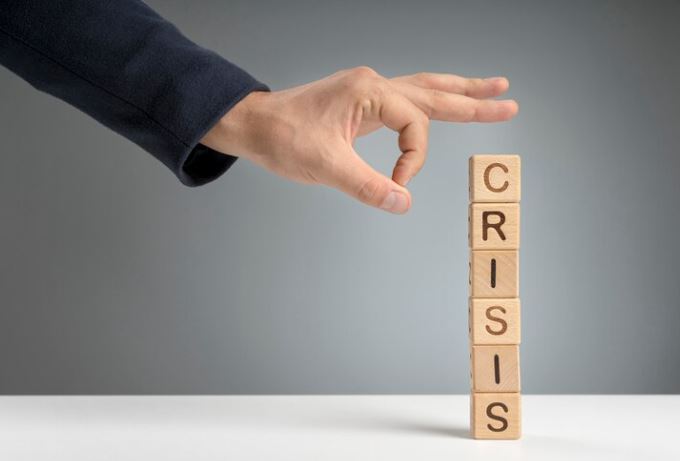
In general, crisis management is about dealing with an unexpected problem, whether internal or external, that can cause harm to the company, institution, or, in the case of events, at the moment itself.
It's important to emphasize that crisis management isn't just about dealing with the unexpected as it happens. It also requires identifying potential sources of risk, addressing them before they become a problem, and even creating a proactive plan to follow in case a crisis occurs.
A guide to help you handle crisis management at an event.
It's clear that crisis management – in any context – requires planning and strategy. By planning ahead and adopting solid plans, event organizers can face unexpected challenges and ensure the success of their events.
Before we get to the practical tips on how to manage a crisis at events, it's important to emphasize that the negative effects in this scenario are diverse. For example, at a social gathering like a wedding or birthday party, a crisis can cause great dissatisfaction among the hosts, who then don't enjoy the moment. In corporate events, in addition to the disruption itself, a crisis can damage the brand's image.
To avoid this, check out this practical guide of best practices to adopt when dealing with crisis management at an event.
Planning first
As we mentioned earlier, the first step in crisis management at events is prior planning. Anticipating potential problems and developing a contingency plan is essential.
Therefore, consider issues such as security problems, speaker cancellations, adverse weather conditions, supplier delays, and other points in your plan, and find alternatives to solve them.
Maintain clear and direct communication.
When managing a crisis, it is crucial to maintain clear communication with the team and participants. Because it is a tense and highly stressful time, avoiding communication breakdowns facilitates the process.
Therefore, be prepared to inform your team and other necessary personnel quickly about any changes or problems.
Have a response team and do the monitoring.
Having a crisis response team is a smart strategy. In this kind of 'committee', each member should have defined roles and already be aware of how to act in different scenarios. This will speed up decision-making and consequently problem-solving.
In addition to this team, another helpful tip is for everyone to monitor the event in real time. This includes security cameras, social media, and feedback from participants. This way, it's possible to identify a crisis more quickly, inform everyone involved, and then take the necessary actions.
Pay attention to the area of public relations and press.
Crisis management is directly linked to the image of your event. In a fully connected world, these problems can be easily publicized, damaging the event's image or even brands.
Therefore, if a crisis arises, analyze the situation and see if it's best to be proactive in approaching the media and the public, or if it's better to develop an action plan in case you are contacted by the press or participants. The important thing is: be transparent and responsible when dealing with the situation.
Conduct a post-event analysis and review your crisis management.
Finally, if you have to manage a crisis at your event, at the end of it, analyze the actions taken during the crisis, what caused the problem, and what could have been done to avoid it. Learning from experience is fundamental to improving the management of future events.
Host your event with us.
Choosing the ideal venue that offers you security and professionalism is one of the fundamental steps to avoid problems. Therefore, hold your event with us.You can check out all the infrastructure available at the Convention Center and throughout the Center Shopping Complex by speaking with our team. Call us at (34) 3239-8300 or email comercial@centerconvention.com.br. You can also reserve a date by clicking [here]. HERE.