
Producing an event, regardless of type and size, is a complex task. One of the key moments is what we call the pre-event phase, which encompasses the entire period of planning, budgeting, and reservations. And it is before the festivities that the site visit takes place, one of the most fundamental tasks for a successful event.
Amidst so many details and with a robust checklist to be completed, the producer or event planner needs to take all measures to avoid problems. Therefore, knowing the structure and conditions of the event venue beforehand is an indispensable step in defining various issues.
For example, it's possible to understand the layout of the spaces, lighting, and acoustics. Now, continue reading and check out tips on how to conduct an effective technical visit.
What is a technical visit at events?
First of all, let's understand what it means to conduct a technical visit to an event. In general, it is a A preliminary inspection was carried out at the venue where the event will take place.
At this point, we can analyze more items than we've already mentioned above. For example, the event organizer has access to the exact measurements of the venue, lighting points, and whether extra lighting or power generators are needed. Furthermore, it's also possible to check the ambiance, set design, and accessibility.
Finally, it's an important task for the producer to plan for needs related to decoration, stages, lighting, and security. It also involves familiarizing themselves with the venue and requesting any alterations or changes, if possible and necessary.
Technical visit to the Center Convention: practicality and efficiency.
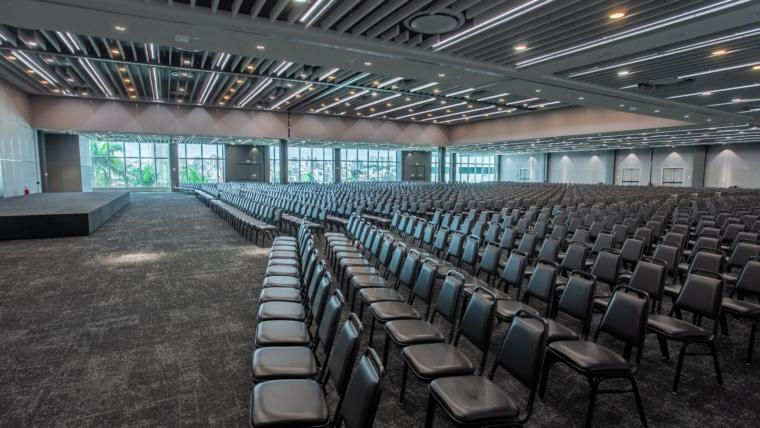
At the Center Convention, which has over 15,000 m² of space, every technical visit is accompanied by executives from the venue. This is an opportunity for the producers or organizers of the event to also clarify any doubts they may have.
Basileu Tavares, commercial manager of Center Convention, shares a bit about how a visit to the Convention's spaces works. “The technical visit is generally the client's first contact with the space, and during this visit, as in a job interview, we are thoroughly evaluated. The goal is not only to demonstrate the structure of the space, but to reassure the client that everything they consider important for holding their event will be taken care of,” he explains.
He also details what producers check during the visit. “We present access points; parking options; the conveniences resulting from our location; the rooms we have, demonstrating their versatility, lighting, air conditioning, modularity, and power outlets; our kitchen, showcasing the strict quality standards we adopt; and throughout the tour, the client will encounter our staff, verifying the friendliness of our team and their willingness to assist them. The impressions obtained here provide security for the event,” he explains.
Basileu also mentions an important point: how long before the event should the technical visit take place?
“"It can happen before or after the event venue is defined. The first time, it's to verify if the space meets the prerequisites for holding the event; the second time, it's to detail the logistics, setup, and structuring of the event, and it's important to involve suppliers in this last step," he explains.
Finally, the sales manager emphasizes that during the technical visit, the producer checks all the available furniture, and it is also an opportunity to review the terms of the commercial proposal and the use of the space, ensuring the producer's peace of mind.
What should you look for during a technical visit?
Now, to conclude this content, we present, in a very practical and dynamic way, some points that should be observed during a technical visit. These are issues that need to be evaluated at this pre-event stage so that decisions, reservations, and modifications can be made.
A good starting tip is to make a checklist so you don't forget anything, and take this material with you on the day so you can remember any questions or doubts you want to ask the people in charge of the space.
Analyze the space in general.
It's a simple but necessary guideline. So, spend some time observing the venue where the event will be held to understand its physical structure. At this stage, issues such as the location of the restrooms, the condition of the paint and cleanliness, and whether the space can actually accommodate the number of participants should be analyzed.
Another point to consider is the need to pay attention to the infrastructure aspects that directly influence the audience's experience at the event: are the air conditioning units working properly? Is the acoustics adequate? Where are the power outlets?
Finally, the event organizer should consider whether the event will include stages or other spaces – such as Instagrammable ones – and during the site visit, determine where it is possible to allocate them.
Make sure it's possible to modify the environment.
In addition to observing the space in general, during a technical visit it is necessary to understand if it is possible to modify it. For example, at the Center Convention, due to the structure of the partition walls, it is possible to alter the layout and size of the space.
This tip is crucial when considering different types of events. Larger corporate events, such as trade shows, may require larger spaces like... newly opened exhibition pavilion of the Convention.On the other hand, training sessions such as simultaneous lectures require an environment where it is possible to divide the participants into 'rooms'.
Therefore, understanding whether these transformations are feasible allows one to proceed with the contracting of islands, display cases, and other elements.
Don't forget about accessibility.
Another important tip during a site visit is to check if the location meets accessibility standards. It's often impossible to predict whether the meeting will include people with disabilities, so the location must meet all requirements.
Accessible restrooms, signage for the visually impaired, and access ramps should be checked beforehand.
Beyond inclusive accessibility, it's interesting to look at more general aspects. One example is parking and how to access the space.
Check if the venue will meet the planned set design requirements.
Finally, as we mentioned earlier, the time of the site visit is crucial for defining aspects such as decoration. Therefore, it is advisable to include those responsible for this area and for set design at this time.
In this way, the professional can study the location and understand which ideas, furniture, and spaces can be included in the event. Furthermore, if something that was planned cannot be done, it's already possible to propose creative solutions to ensure the environment is visually pleasing.
Host your event at our venue.
Interested in holding your event at the Center Convention? You can check out all the infrastructure available at the Convention Center and throughout the Center Shopping Complex by speaking with our team. Call us at (34) 3239-8300 or email comercial@centerconvention.com.br. You can also reserve a date by clicking [here]. HERE.